Outback Mike reckons the more hardship you've been through, the less the next bit hurts — and he's got 64 days on Alone and 50 on the Great Barrier Reef to back it up.
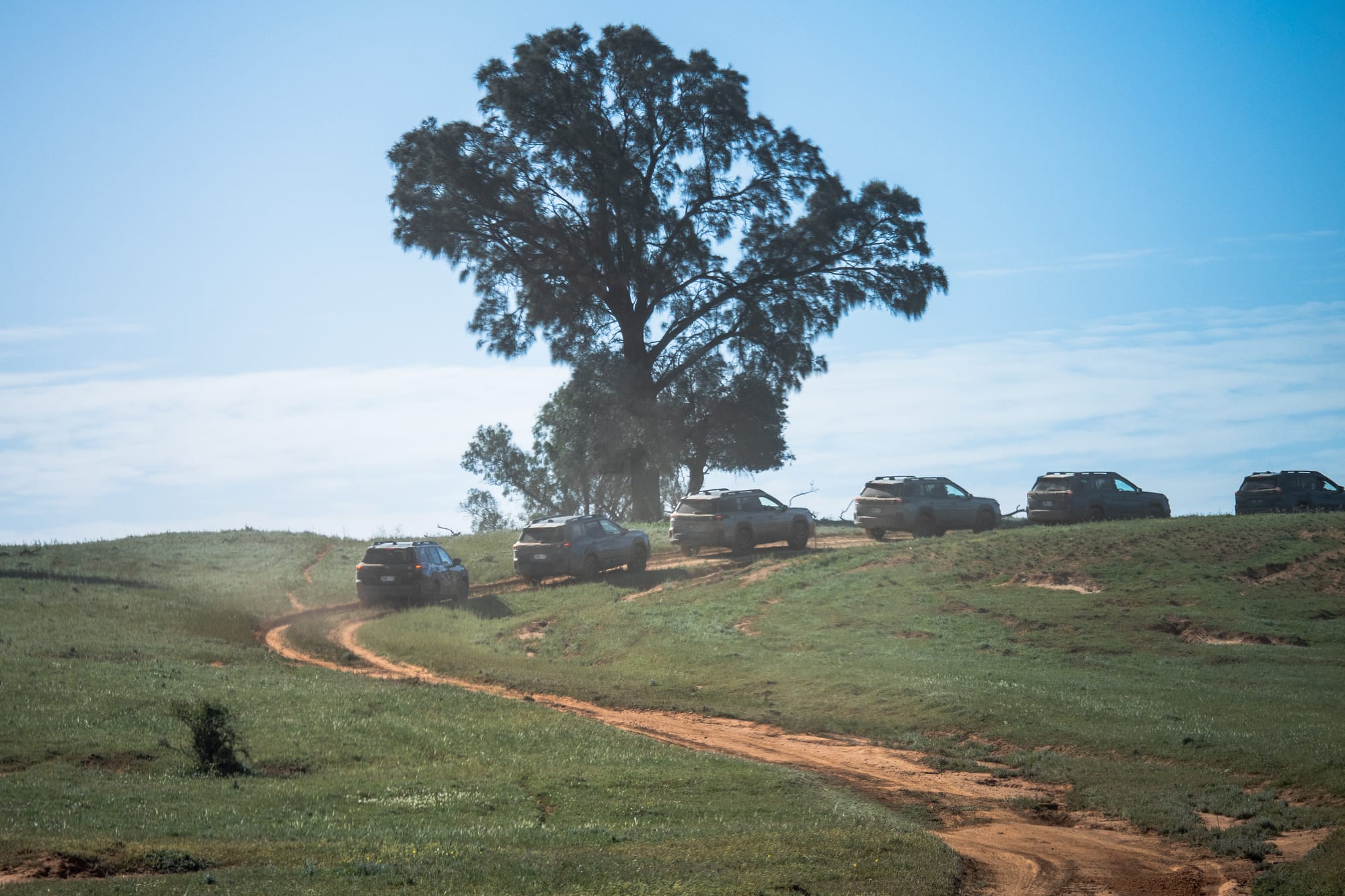
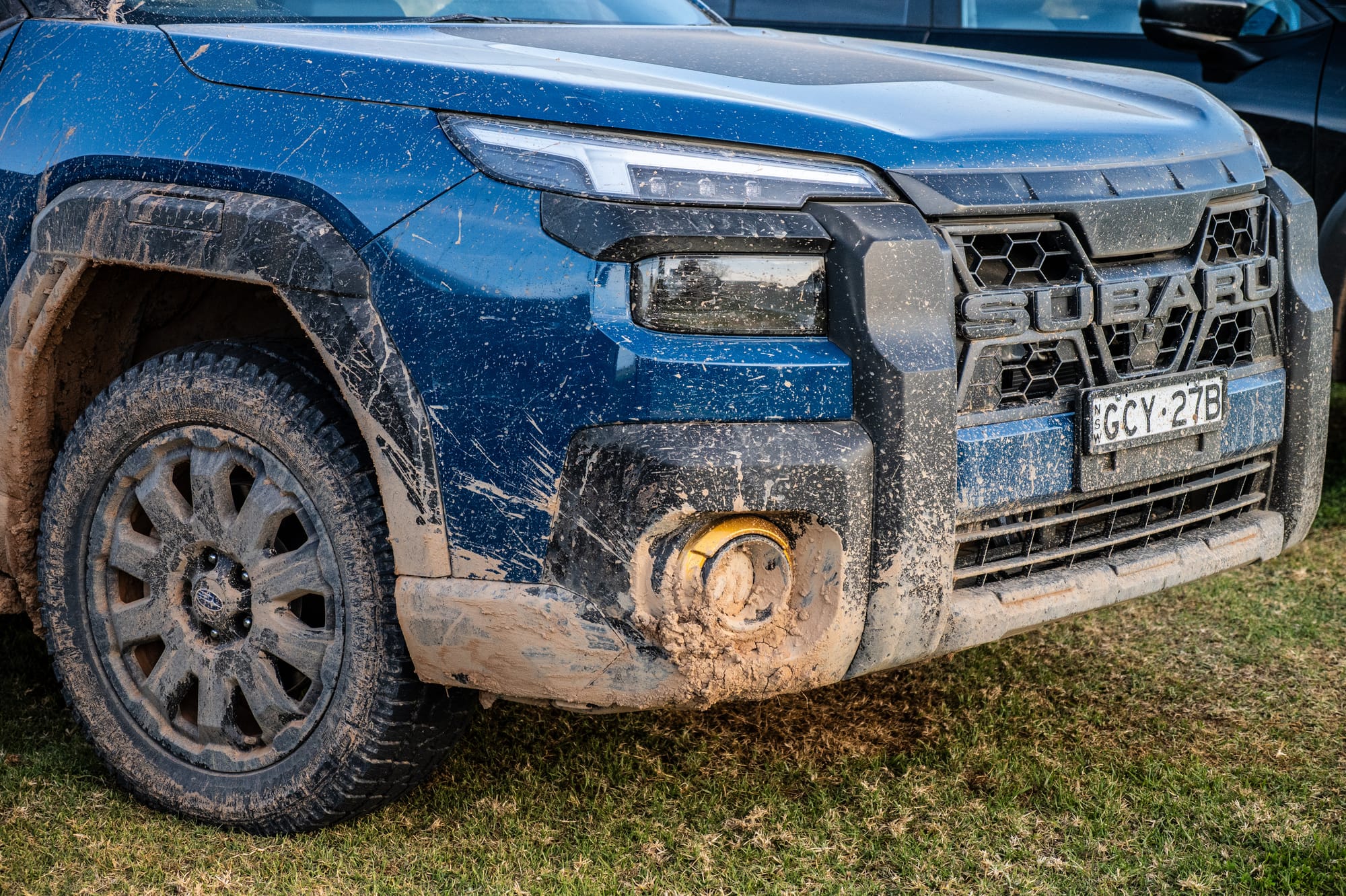
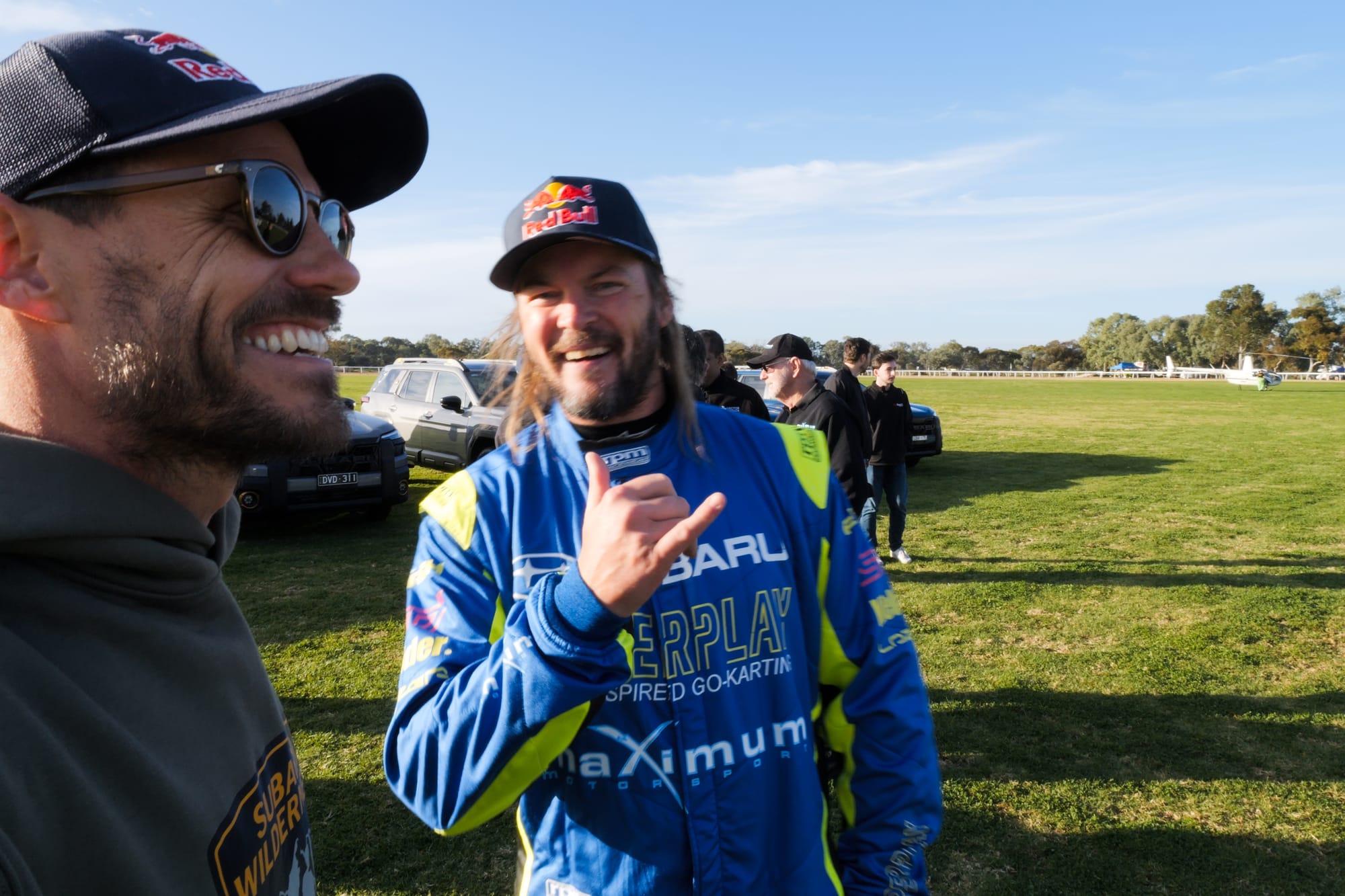
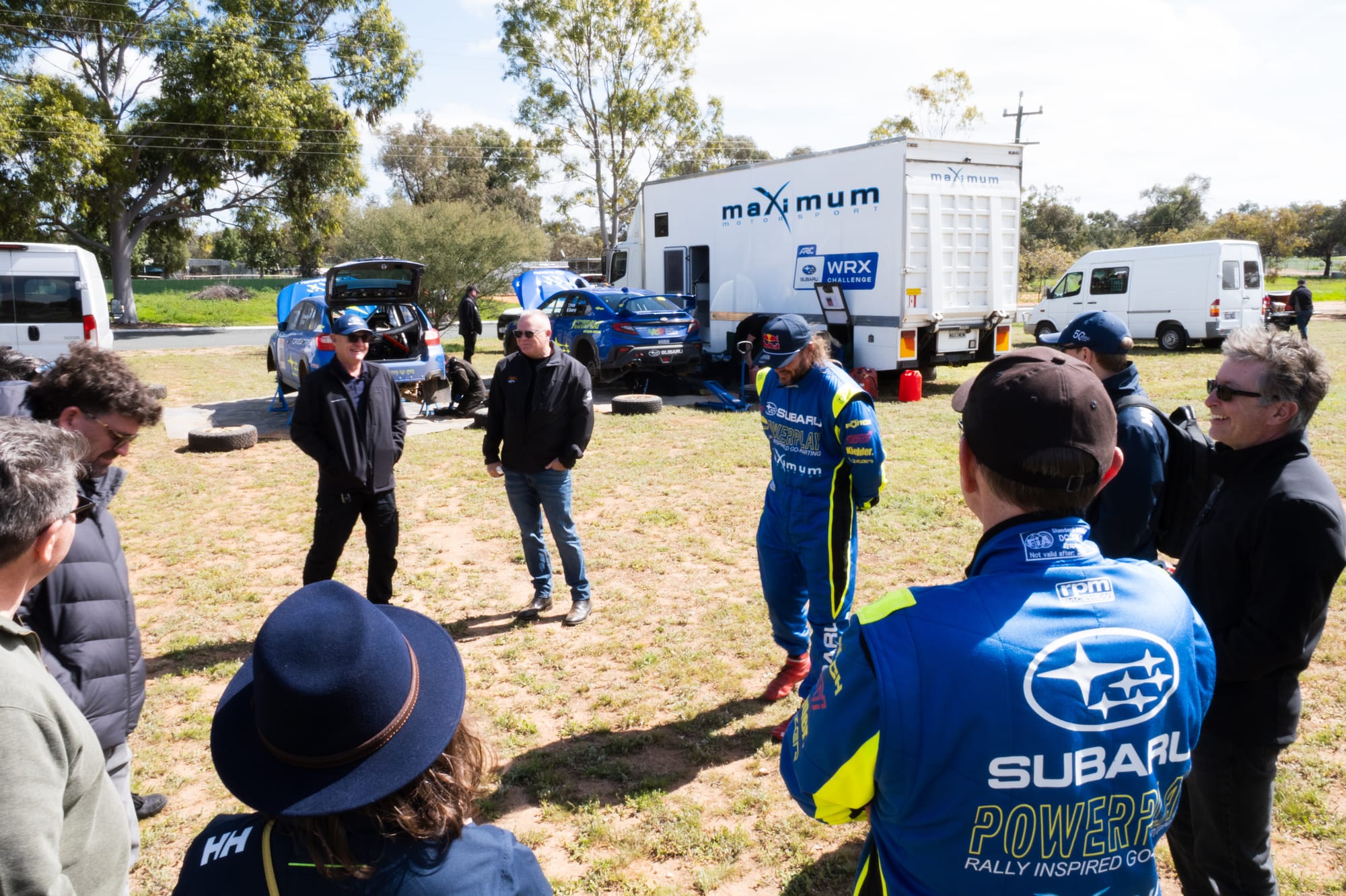
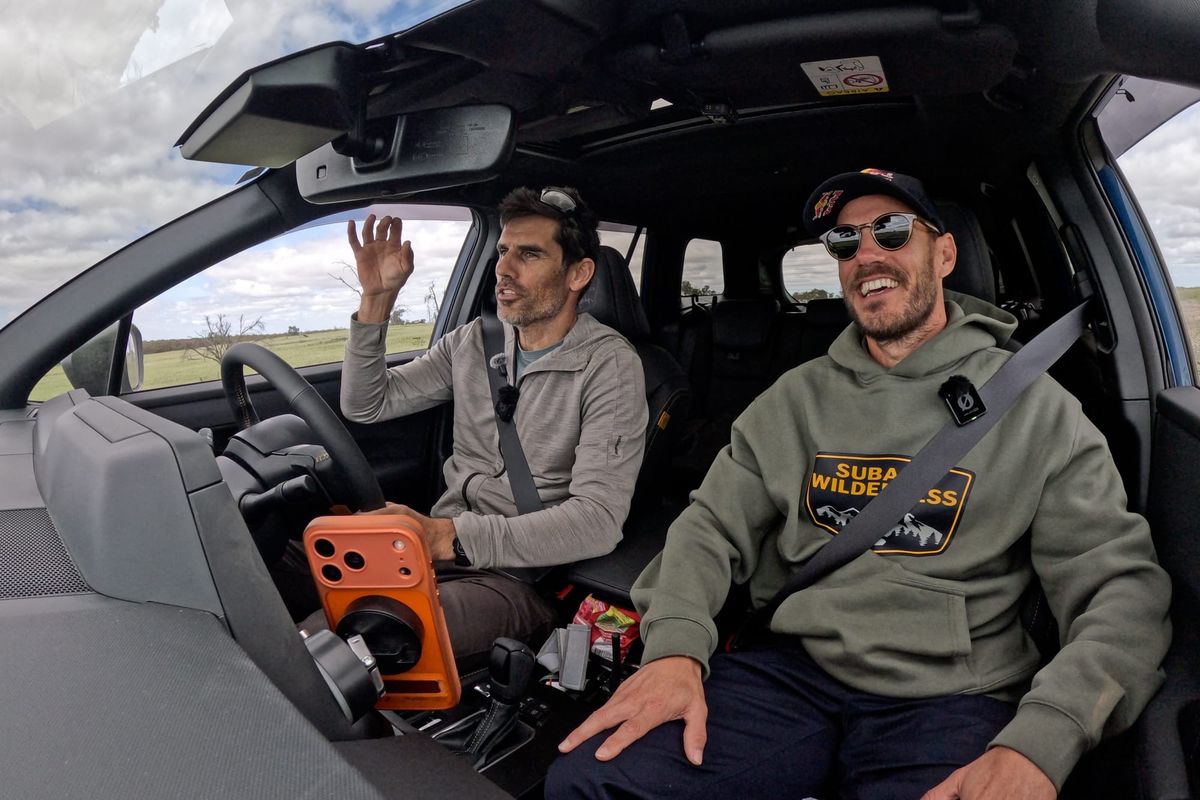
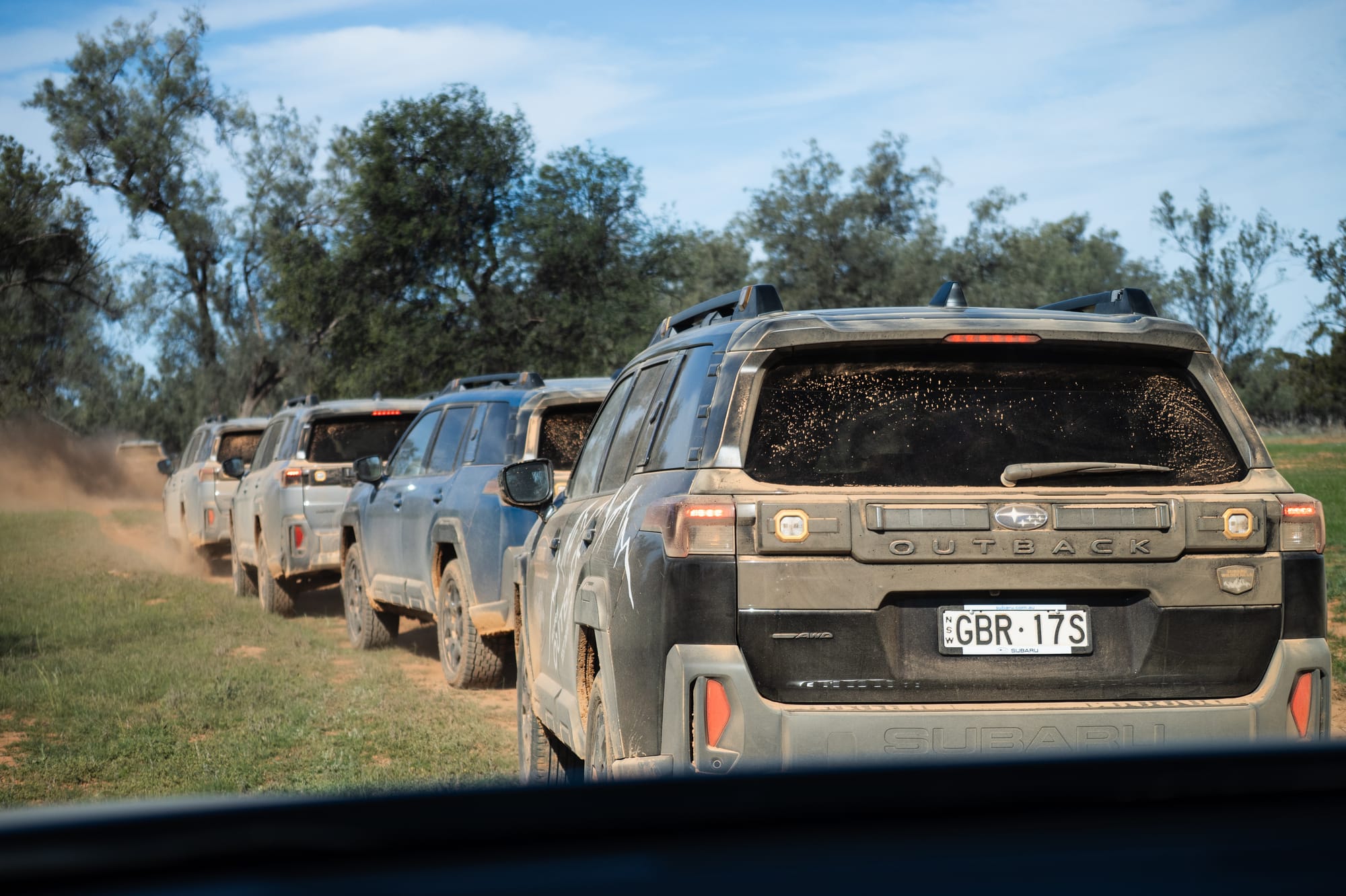
Recorded from the front seats of a Subaru Outback Wilderness on a live rally course at the Sunraysia Safari near Mildura, this bonus episode sits Courtney down with Outback Mike: adventurer, survival expert, filmmaker, former Army helicopter and Air Force jet pilot, and runner-up on the first season of Alone Australia. With Toby Price out on course in a WRX and Cody Crocker leading the convoy, it's a fitting place to talk about risk.
Mike explains why living rough gives you a baseline for hardship, why he felt he could have stayed out on Alone well past day 64, and why the athletes the public see as the craziest are usually the most calculated. He splits risk you can manage from the pure dice rolls he calls dumb risk, and walks through the sports psychology lesson — Tiger Woods on the 18th hole — that changed how he flew and how he taught.
From there it's rites of passage and resilience in kids, his next project taking an electric Subaru Trailseeker across the Simpson Desert from Birdsville to Mount Dare, and a shoe chat about Altra Lone Peaks, zero-drop training and Courtney's prediction that shoe brands will soon sell a 'strengthening shoe' alongside the super shoes.
In this episode
- Why putting yourself through real hardship gives you a baseline that makes everyday life feel better — "the more suck you experience in your life, the more the next bit of suck doesn't seem so bad"
- Alone Australia season one: runner-up, removed at day 64, and why Mike believes he had more in him after going 17 days past the same symptoms on a 50-day Great Barrier Reef trip
- Why the athletes who look the most reckless — Toby Price included — are usually the most calculated, and why you have to be stingy with risk
- Dumb risk: what you can't manage your way out of, committing anyway, and constant reassessment when risk creeps up like a frog in boiling water
- Emergency procedures, discipline and what military aviation teaches about performing under pressure
- The sports psychology lesson built around Tiger Woods on the 18th hole, the NBA rubber-band cue, and how it got Mike through jet training
- The student in Saudi Arabia who sent Mike two grand five years after passing his course
- Rites of passage, participation medals and why Mike thinks we don't prepare people for hardship the way we used to
- The plan to cross the Simpson Desert from Birdsville to Mount Dare in a stock Subaru Trailseeker EV, with a generator and a point of no return
- Altra Olympus vs Lone Peak, zero-drop shoes between races, Courtney's prediction of a 'strengthening shoe' category, and running four pairs until they're properly done
Timestamps
- 0:00 — On the Sunraysia Safari course with Subaru
- 1:29 — Survival training and a baseline for hardship
- 3:52 — Alone Australia: removed at day 64
- 6:43 — How to actually assess risk
- 9:14 — Dumb risk and the dice roll
- 10:57 — What military aviation teaches you
- 12:20 — Focus, Tiger Woods and the 18th hole
- 14:17 — Mental cues to snap back into focus
- 16:18 — Kids, resilience and rites of passage
- 19:46 — The Simpson Desert in an electric Subaru
- 23:07 — Altra Lone Peaks and the strengthening shoe
- 27:17 — Grown-ups' rules
Listen
Related In The Beginning episodes
- Liam's UTA Miler: No Sleep, A Locked-Up Knee & 38 Hours To Finish
- Too Fat To Run To Pro Triathlete: Adzy Gordon | EP 104
- Andy Buchanan On Marathon Pacing, Super Shoes & Why He Won't Touch AI
In the news
The Toby Price seen flogging a WRX around the course in this episode went on to win the 2026 Sunraysia Safari outright on his debut. Price and co-driver Ben Searcy covered 1,058.65km of competitive driving in outback NSW in 10 hours, 58 minutes and 36 seconds, averaging 96.45km/h, and beat Dean Herridge's Subaru Crosstrek by 92 seconds to give Subaru a one-two. Tony Quinn was third in a V8 Nissan Navara (Torque Cafe, River 1467).
The detail that matters for this conversation is the car: a production-specification WRX with only safety and suspension changes and a snorkel added. The point Courtney and Mike land on at 7:14 is that the people who look most reckless are usually the ones who understand the risk best, and a Dakar and Finke champion taking a near-stock road car through a four-day desert rally and winning is about as good an example as you'll get.
Full transcript
Auto-generated transcript, lightly edited for clarity.
Read the full transcript
[00:00] So this is a special episode of In The Beginning podcast, because I've got Outback Mike with me today: an Australian adventurer, survival expert, filmmaker and former military pilot. That's what I'm really interested in too, some of the experience in the army. And we're getting radio instructions as well, because we are out with Subaru in a Subaru Outback Wilderness Apex, so the new Subaru Outbacks, and we're on a live rally course. So at the moment we're in a transit stage on our way to lunch, but we've literally just driven the first stage of the course.
[00:34] Toby Price is out here in a Subaru WRX today, driving. And I can't believe they've actually just given these cars to us to go pretty much as hard as we want. So it's up to us how hard we push. But it does all right, doesn't it? Yeah, it does. Yeah, it's very comfy and fast. What I wanted to talk about: obviously my background's in running, and the main podcast we do is a running podcast, but there's so many things that I think cross over, and we've talked about shoes before and barefoot and a range of things, so I want to get onto that.
[01:06] But what I'm interested in, when it comes to my sport, endurance, there's a lot to do around resilience, making the right decisions as you go under pressure and everything like that. Now, I heard that in your early days you did a lot of your training around Indigenous survival as well. Yeah, for the survival part of it, yeah. What did you learn, or what did they teach you, about everyday things out there, surviving, resilience out in the bush, that you could pass on to
[01:40] people out there in today's modern society, or even people out doing endurance stuff? I think, I mean, the Aboriginal side of it was mostly about knowledge transfer rather than values or resilience training. But putting yourself outside your comfort zone into a survival situation, where it's extremely physically uncomfortable and potentially dangerous and all those kinds of things, that increases your resilience just through the fact that you have to suck it up. And I think today we almost feel like if we ever feel uncomfortable or stressed, then we've
[02:14] failed, because we should have done something so we weren't uncomfortable and stressed. We don't give ourselves the opportunity for it to suck. And the more suck you experience in your life, the more the next bit of suck doesn't seem so bad. And so a lot of the time, if you're brought up in the first world in Australia, the worst thing that has ever happened to you may be, I don't know, one of your friends doesn't like you anymore or something. Whereas if you've grown up with not enough food on the table, worried, am I gonna survive? If you grow up in a war zone,
[02:44] then other things like that just don't seem as big. And so when you go out and you live off the land and you're really hungry, you're really thirsty, you can't take anything for granted. You just fantasise all day long about not having flies, and being somewhere, and having food in your mouth. When you get back to those things, everything is just so much better. Yeah. So it's like having a baseline for hardship. Yep. And every time I go out on an adventure and survive for a couple of months, when I come back I really have a reset of my appreciation for it.
[03:17] It does fade, but it's always there as a baseline, so I can go, you know what, today seems like it sucks, and then I go, I've got food in my stomach, I've got water to drink, I'm not worried about dying in the ocean, rolling my canoe over. It makes you a lot happier, because you can appreciate things. Oh, there's so many things there, because a lot of the audience that listens to us are doing endurance races, definitely not multi-stage survival things like you, but it's similar in that you get to a point where you want to give up. Your body's starting to give up, it breaks down, all those things matter.
[03:49] Now, you were runner-up, am I right? Runner-up in the very first season of Alone? Yeah. So that was the SBS show. Yeah. I mean, a lot of people, when I say I'm with Outback Mike, the first thing they say to me is, I remember you from that show Alone. When it comes to resilience, while you're out there, do you know that the other person is still out there at the same time, or? Well, yeah, you're assuming that if you haven't been removed yet, there's someone else out there.
[04:25] Okay. Yeah. So you're literally just hanging on as long as you can, until eventually someone comes and tells you you either won or you didn't. Because in your case you were taken out of there against your will. Explain, for those who didn't watch it: can you give us a quick rundown of what Alone is, and then what happened in your case? Right at the end, it was 64 days? Yeah, 64. They removed me at the 64-day mark. So the idea of the show is they get ten people to go out in the wilderness, you can select ten items from a list of about forty, and then you survive as long
[05:03] as you can, until you either tap out or they medically remove you. So yeah, I was removed at day 64, and to be honest I can't tell you what happened behind the scenes, because I'm not allowed to. I had to sign a secrecy agreement. Right. On a public broadcaster that has a requirement to be transparent and trustworthy. So that to me is a real problem, and so the public don't know what happened behind the scenes, and I can't tell you. But I can tell you that I felt confident I could have stayed out there longer.
[05:35] In fact, I'd gone seventeen days past the physical symptoms I was at on that. Just eight months prior to that, I'd been out on the Great Barrier Reef for fifty days, and so I knew exactly what my body goes through. Yep. And there's certain symptoms that you get. And so yeah, I went seventeen days beyond those symptoms on my previous trip with no issues. But I mean, there were some positive things about it. It's another chance to be in a beautiful wilderness area, even though Tasmania has been trashed in many ways, and that's quite sad
[06:12] environmentally; there's a lot of stuff going on down there. There are a lot of restrictions on food, and I understand the restrictions, because the environment is fairly trashed, so we do need to be careful about what things we take and what things we don't take. So yeah, it was a good experience overall. We do a lot of that too. I've raced across Tasmania in the Mark Webber adventure race, and I've been to a lot of those different spots all through there.
[06:43] I think when it comes to adventure racing, trail running and some of the things I'm into, even if you're just out there doing your own expeditions, a lot of it comes back to the question of how you assess risk, and then how you make a decision about moving forward. So that can be around survival. I often talk about it in the areas I know. We met Toby Price this morning, who's out there flogging his Subaru WRX around today, obviously doing that exact thing, taking on risk.
[07:14] When it comes to action sports, the guys the public see as the most risky, doing the craziest stuff, when I actually know them personally and meet them, they're actually the most risk-averse. Yes. They're the ones who are most calculated. Can you relate to that in your area? Absolutely. So for the average Joe to go and do a double backflip on a motocross bike would be highly risky, not just because they're not trained in it, but because the reward for them,
[07:45] other than a bit of bragging rights with a friend, isn't that much. And I know Toby Price isn't into the flips and stuff, but if you take a motocross rider who does all those flips, and you're an up-and-coming male in that sport, you're highly skilled, you understand the risks, and the benefit of landing a triple backflip is your career. You've now got an awesome career, right? They actually have a lot more to gain, and that's what society doesn't do well: balance the upside of it. And to progress at something over a long time, you have to be stingy with risk.
[08:19] You have to be very careful about the ones you take. So Toby would understand the risks; he'd be in the top ten people on the planet who understand the risks of what he's doing. And so he can get closer to the edge, but at the end of the day you're also still taking a risk. So when something goes wrong, people always say it's because you didn't manage the risk. But at the end of the day, you're still rolling a dice, and it can still come up six. So yeah, society generally does a bad job of that, of understanding the upside of taking a risk. But really, how good you are at managing risk is directly proportional to how experienced you are in that thing.
[08:56] A hundred percent. And that's why when you first get into a sport, you're often exposed to the greatest risks, because you don't know what they are. I got into kitesurfing, and the first few times are by far the riskiest, because you didn't realise that what you did there nearly killed you. But the more experienced you get, you realise how to avoid those things. But what I really hate is when I'm exposed greatly to what I call dumb risk. So if you're a mountaineer, you could be the world's best mountaineer, but if you have to transit for twelve hours beneath a glacier with seracs hanging over you, and you've chosen the exact best time of day, when the ice is frozen and it's less likely to fall,
[09:31] at the end of the day you're still subjected to a risk that is purely a dice roll. So I'm always trying to reduce my exposure to dumb risk. But sometimes, when you've got to commit, you just go, right, this is high bloody risk and I'm just gonna do it: head down, focus on what you're doing, get through it. And if you end up breaking your spine because a rock falls on your head, it's like, well, I calculated the risk very well, but I still came up short. So it's being able to rationally assess risk beforehand, and then during. When you're doing something, it can be like a frog in boiling water: the risk can creep up, creep up, creep up.
[10:04] You've got to get to the point where you go, you know what? The risk is no longer worth taking. Stepping back, reassessing, then stepping forward. So it's constant reassessment. Has your risk changed? Has that risk assessment changed as you've got older? You've got kids? I actually don't think the level of risk I'm willing to accept has changed that much. It's just that I'm a bit more aware of when to take it and when not to. So for example, the Great Barrier Reef trip, where I built a dugout canoe and went down the Barrier Reef in a really unseaworthy vessel.
[10:37] I was exposed to those risks for a long time and I was making all those decisions. But at the end of the day you've got to commit, and if the wind picks up and it gets really bad, you're up shit creek. So I was still taking a high risk there. I don't think my risk tolerance has really changed that much. It's just gotta be worth the reward. And you've got that whole background. How long were you in the military? Yeah. Military helicopters, everything else. What did you learn in the military that you've then realised doesn't necessarily correlate in the real world?
[11:16] So the risk you had in the military: is there some stuff in the real world where you find it actually doesn't correlate, or is it everything you learned in the military, you go, I can put that into practice? Yeah, I think everything applies directly across. Discipline? Yeah, yeah, the discipline. I think particularly with military aviation, and this is the part I think people can take away into their everyday lives, it's all about optimal performance, and then when things go wrong, having a way to react to that difficult situation and come out on top.
[11:51] So in aviation, for example, take dealing with an emergency. Most of the time it's all fine, but then maybe one of your engines fails. And so you have these preset procedures, which an expert in that field has written out, and you have to memorise them and be able to take all those actions under high pressure whilst making other decisions. And that's the best way you can perform under those circumstances. And then later on it can come into a little bit more of which fork in the road do I take here. Yeah. And another thing I didn't realise I didn't do well was focus.
[12:26] When someone said focus, it just sounded like a bit of a wank word, really. But I realised when I was struggling on my flying instructor course. Actually, no, it was after that. We had a sports psychologist from the States come over here. I think he worked with Tiger Woods and a bunch of basketball players. And he had a picture of Tiger Woods on the 18th hole, and he goes, what do you think Tiger Woods is going through in his brain right now?
[12:56] And he's got crowds of people around him, and we're like, he could be thinking, if I hook the ball, if I slice the ball, I'm gonna hit that old lady in the head. If I don't do this shot well, I'm gonna lose my number one ranking. If he thought those things, he would perform poorly, and it is natural to think those things. But if he goes into it with a mindset, a pre-prepared mantra, three things about himself: I'm Tiger Woods, I've practised my crosswind shots so well that this crosswind isn't gonna affect me. Yes, I'm under pressure, but I'm the best guy under pressure.
[13:27] That helps him focus on what he actually needs to focus on, which is: what club should I select? What's the range? How much should I allow for the crosswind? Is my stance correct? Is my grip correct? So in a survival situation or a high-pressure situation, you need all of your focus on the exact things that will make you survive. If you're thinking about what's my wife gonna think, I shouldn't have made this decision, you're now not focusing on, shit, where should my feet go so I don't slip off the cliff? With experience and practice you tend to focus better anyway, but if you
[13:58] recognise, as I did, that you're not focusing well a lot of the time... I was worrying. In a high-assessment mission I'd be worrying about, I made a mistake on takeoff there, my airspeed wasn't very good. I'm thinking about that when I should be thinking about levelling off on this instrument approach. So your brain's not present, and being present in real time is an important factor. So do you have a cue that you use to bring yourself back to that? Yes. The sports psychologists for the NBA players and those guys, they have a rubber band on their wrist. As soon as they catch it, they flick the rubber band, which is a physical reaction that sends them into their mantra.
[14:31] When I'm flying, for example, if I find my brain wandering, I just acknowledge it, not too much, because that takes too much focus away. And I focus on, okay, what's my attitude, what's my heading, have I done my checks recently? And that gets me back into my periodic ten-minute checks, for example. That helps me keep my focus. So there are techniques like that they use in sports psychology. And once I learned that, I applied it, and then I transferred across to the Air Force to fly jets, and I was able to stay focused throughout these really high-pressure missions.
[15:03] I maintained good focus, and I really benefited from that. And then later, as an instructor, I was instructing other students, and in the debrief, when they failed the mission, I'd be asking them, okay, you did these things wrong, but what were you thinking about right there? And half the time it wasn't that their brain wasn't capable enough, it was just focused elsewhere. And then if you pass on those techniques, for about a third of them it made enough of a difference that they then passed the course. And they're like, no shit. A guy in Saudi Arabia messaged me. I helped get him through this course, and it made a huge financial difference to him.
[15:38] And he just sent me two grand the other day. He goes, mate, I just got it, and even though this was five years ago, I know I wouldn't be here without those lessons. And really, they weren't my lessons, I was just passing on someone else's. But that's how much of a difference it makes, if you're the kind of person, like myself, who can lose focus. Not everybody does, but I'd say half to two-thirds of the population is prone to losing focus. Yeah. Being able to zero in, or get your mind off something when it's completely consuming you, is how you manage it. And I think cues, in
[16:11] running we talk about cues a lot for form and technique, but we probably don't talk about them so much from a mental point of view. I've heard you talk about kids, and about them actually building resilience at a young age so they're prepared for further on in life. And with Liam, who co-hosts our podcast, I've talked a lot in the past about everyone getting a participation medal versus,
[16:43] you know, sometimes having to learn to lose or win. And obviously there's a happy medium in everything. Oh my God, look at that. Yeah. A semi-trailer just nearly went off the road in front of us. Yeah, so, around that: I heard you talk about resilience in kids and how important it is. Can you talk about that a little bit? I mean, I guess it's a little bit like what I said already: we don't give ourselves enough opportunity to experience hardship. But almost every Indigenous culture has some kind of rite of passage, an initiation ceremony.
[17:14] Aboriginal people had it. And let's just say you didn't get to have those difficult experiences otherwise: they make you go through some really nasty shit, right? And some of it's really horrible, and it's just about you putting up with a great deal. And it's partly so you have something to fall back on later and go, you know, this sucks, but it's not nearly as bad as the thing I did that time. And it's also part of saying goodbye to your old self, who wasn't necessarily taking responsibility for your actions: now I'm a man.
[17:44] And so you have to earn it. You actually have to earn it to be there. And we don't have that in our society anymore, and I think that's one of the contributing factors to mental health issues and things like that. We don't prepare people the way we used to. Yeah, right. Couldn't agree more. To the point of actually needing to go through that hardship sometimes to understand... well, then it makes it worthwhile, right? Because to me, and this is probably more from a competitive point of view, but from a life point of view as well,
[18:18] if you never understand the difference between winning and losing, then as you get further along in life, how do you actually strive for anything? You just sit back and you're comfortable. It also helps your tribe, or even your country, succeed. So in the tribal case, you know how hard you had to go through your initiation ceremony. So when another man who's been initiated has the scars, literally the ceremonial scars to prove it, you're like, I want him on my shoulder when we go into battle. And it's the same thing; that's one of the reasons the military effectively does it.
[18:49] You go through basic training, and they make it really hard. But it also makes you a more cohesive society. So in societies where everyone goes through military training, for example, in a natural disaster everyone's more likely to just muck in straight away, shut up, zip lip. These days, if an emergency happens on an aircraft, everyone's like, oh my God, no one's focusing, everyone's a blubbering mess. I think if you went back fifty or sixty years, when everyone dealt well with hardship, there would have been silence.
[19:19] People would have been helpful. Yeah. There would have been constructive behaviour in a difficult situation, and now you see so many cases where everyone just shits the bed. Yes, it is. And so as a society, as Western society, we're now so soft that other countries who have had it harder for longer, like China, are a real threat just because they're more competent as a society. What are we doing? Getting around a car up here. So your latest... well, we're sitting in a Subaru Outback Wilderness.
[19:50] Have you been driving the Apex? No. No. Same clearance, same thing. You just took it through the Simpson Desert. Yep. So, Birdsville to Mount Dare. Can you talk about the next challenge? Yeah, yeah. That small minivan. It's way overtaking this minivan. So yeah, basically I'm gonna be taking the Subaru Trailseeker, effectively the electric version of this, across the Simpson Desert.
[20:21] And it's longer than you can go on one charge, so I'm gonna have to charge it with a generator in the middle. And I can imagine a whole bunch of people going, that's just so stupid, why would you do that with an electric car? I'm not saying you should go out and buy an electric car as the optimum vehicle to cross the Simpson Desert. That's not ideal. But what is ideal, I think, and a no-brainer, particularly if you have solar and a home battery, is having free fuel at home for 99% of your driving, which is within 500km of home. And that's the range on one of these things.
[20:52] I live two and a half hours from Sydney, so I could drive to Sydney and back. Ninety-nine percent of most people's driving is close to home, and that's what you're buying a vehicle for. But if you did want to take it and do something in the outdoors that was fairly long and extreme, could you do it? That's what I'm trying to answer. Can you do it in a stock EV? No one's done it in a stock EV that I'm aware of. Someone went across in a Suzuki Sierra with solar panels and stuff, with a support crew, but... What do you reckon the biggest challenge will be?
[21:23] The biggest challenge will be, well, charging. Having gone across in the Wilderness, there's not that much difference in the clearance specs for the electric version. I've been driving the Trailseeker for the last month, and every time someone gets in it they say, this is higher than I thought it would be for an EV. I don't understand all the aerodynamics and everything else of it, but we're driving along today with a whole heap of car reporters and YouTubers, and they're all saying the same thing.
[21:53] We can't understand how you get that efficiency out of the Trailseeker while it's sitting nearly as high off the ground as an SUV, right? Because it goes against the aerodynamics to a degree. But that'll be an advantage for you. Yeah, yeah. And I know the clearance is high enough, because the Outback got across there. So yeah, I think it'll be fine. It's just about how much extra electricity I need in the battery to compensate for the sand. Okay. How often do you reckon you'll need to charge it?
[22:24] I reckon... I'm working on, at the moment, that it will need fifty percent more power than it would on a highway. Yeah. That's what it was like in the petrol one. Yep. But I haven't got the vehicle yet, so I'm gonna drive it on soft sand for an hour and look at how much the battery goes down, and then I've got to work out how much fuel the generator needs to convert into kilowatt hours and all that stuff. Just some basic maths, and obviously put in a reasonable bit of buffer.
[22:54] And then have a halfway point, or a point of no return, in the desert, where, you know what, if I'm not making it, I can still just make it back to the start point. These are all standard aviation things that you do. Yep. And the last question I've got for you: we've talked a little bit about shoes before. So you get up to a bit of running, and you're in the Altras? Yeah, Altra. I've tried both now. One was the Olympus, which is the kind of squishy one, but then I got the barefoot-y one, the Lone Peaks.
[23:27] Yep. Yeah. And so... Well, the reason I bring it up is we were talking about it, and I'm actually a believer in giving your foot space to breathe too, and in questioning whether all the new high-rubber, super shoe type stuff, and there's no doubt they're faster, is actually causing some efficiency or mechanical issues that have an ongoing effect. And you were saying to me that you seem to find the wide toe box, and you feel better running in that.
[23:57] Yeah, well, I was actually asking for your advice, and I agree with what you said. You were basically saying that you strengthen your feet quite well if you give them that basic zero-drop, barefoot kind of experience in between races. Yeah. And then when you're racing, you put your Formula One shoes on, which give you all the cushioning. But I put on the Lone Peaks and it felt slightly weird for a little bit, and then it felt normal. So... Yeah, it wasn't as much of a difference as I thought.
[24:28] There was more padding than I expected. Yep. But it just felt a little bit funny for a while, and then I didn't notice it. And I guess it's just good to have that experience. But I just don't have as much experience as you. No, well, funnily enough, since we spoke and you gave me some feedback about how much you were liking them... because I'm the same. I like a bit more space in the forefoot, so my toes and my metatarsals, everything, feel like they're actually working and I can feel the ground. And that goes against the new super shoes and high-rubber shoes to a degree, where you just lose all of that ground-contact feel.
[25:04] But I've got a prediction, let's say. I think where we're gonna land, and I'm not sure whether it'll be in one, two or three years, and not that anyone needs any more shoes, is this: I think you'll start to see shoe companies with a strengthening shoe, nearly. A shoe you wear at certain times to give you that nearly barefoot feeling. Not necessarily barefoot, you still need something under your feet, but that feeling of building the muscles, building the strength.
[25:35] Nearly like the shoe you train in, or where you get used to the spring, and then obviously you race in the quick shoes. And unfortunately I think we're going to find ourselves in a shoe era where we need more shoes. When you want to run fast you have these, but when you want to keep yourself uninjured, there's a category over here. And I think it was actually ASICS who just recently brought out a shoe where they've gone back to a bit more of the basics. And yeah, I reckon watch this space. Could be a bit of everything in there.
[26:05] Yeah. Yeah, and I think as long as you're wearing your shoes out, it's okay, you know, you can have two pairs... Do you count Ks? How many Ks do you get out of a pair of shoes? I generally have four pairs on the go. Normally I wear a pair until it gets really worn out, then it goes to second, and then I buy a new pair. And whenever I'm going to do something that'll rough them up, I go back to the old pairs. So my fourth pair of shoes is in really crap condition. That's for if I'm gonna go whitewater rafting or something. Yeah, yeah. But yeah, I feel it's wrong to chuck out a pair of shoes unless they're literally barely wearable.
[26:38] I think that's one of the things: people wear shoes differently, but they don't realise how much they can get out of a shoe. And look, there are some runners who are in a position where they can change shoes more often, and there's no doubt that fresh rubber is more beneficial and softer, and feels better. But you hear stories of people getting seven hundred, even up to a thousand K out of a pair of shoes and doing fine. If you hand them on to somebody else, they get use out of them too, but the idea of just getting them and then throwing them out when they've got plenty of wear left, I hate.
[27:12] And I always remove the shoelaces and see if there's anything else I can take off before I chuck them out, too. So, Savo, I reckon we're nearly finished here. We're in a transit stage at the moment, literally heading across to the next stage of this rally. The way it's working is you get to drive half, I get to drive half. I got all the twisty bits this morning and you got all the straight bits. How are we gonna figure it out, Savo? You want the twisty bits, or do you prefer the... I'd take some twisty bits, actually. Yeah.
[27:42] I did get onto that tree early on. I saw you brace. That woke me up pretty early. Yeah. Yeah. I'm still actually pinching myself that they've given these cars to us on a live rally and basically said, you know, within reason... Cody Crocker, Subaru's rally driver, who's leading us at the moment, just said go for it. Yeah, it's grown-ups' rules.
[28:12] That's right. Anyway, fun day out. Mate, thanks for your time, and good luck. Good luck crossing the desert again. Thanks.