Jump to timestamps · Read the transcript
Noosa is 11 days away. Here's everything Dan Atkins told us about racing it, in race order, in 43 minutes.
Listen
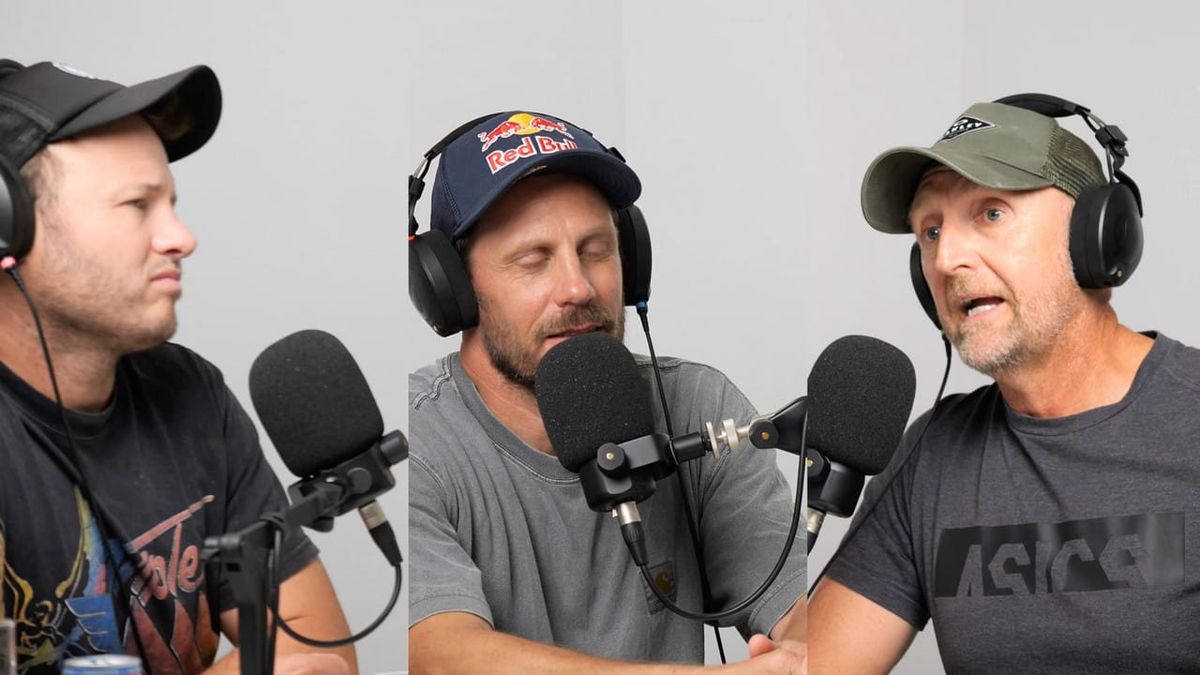
Coach Dan Atkins sat in with Courtney and Liam for the whole Road to Noosa series last year. He's an Olympic coach and coaches Matt Hauser, who won the 2025 world title partway through the series. For this bonus episode we've pulled Dan's best advice from five episodes and put it in the order you'll race it: the swim, the bike, the run, then the last 10 days. Courtney, a three-time Noosa champion, links it together.
The race starts at Garmin Hill
Dan's first point is that Noosa isn't just an Olympic distance, it's a course. You have a surf swim in unknown conditions, a soft-sand run to transition, a rolling first 10K on the bike where most people go too hard, and Garmin Hill, where he says the race really starts. Hold back for the first five minutes on the bike, start drinking, and get to the base of the hill with something left.
Also in this one: reading the ocean and getting through the surf, goggles and the double cap, swimming wide of the turn cans, sitting on a swimmer's hip, carrying two bottles (one carbs, one water), descending Garmin Hill safely, running the first K 10% slower, matching your run cadence to your bike cadence, the run's sneaky cul-de-sacs, race-week food and sleep, rehearsing race breakfast and the jobs to do on Saturday.
Episode highlights
- Why Noosa is a course, not just a distance, and why the race starts at Garmin Hill.
- The surf start, the turn cans and swimming on someone's hip.
- Spinning the first 10K, two bottles and getting down Garmin Hill safely.
- The first K 10% slower, cadence, race week, breakfast and Saturday recon.
Timestamps
- 0:00 — Intro
- 0:41 — Noosa is a course
- 1:23 — The race starts at Garmin Hill
- 2:44 — Reading the Noosa ocean
- 5:10 — Goggles and the double cap
- 7:18 — Don't sprint into the surf
- 9:41 — Swim wide of the cans
- 10:58 — Sit on the hip
- 12:17 — Legs in, then the beach
- 13:43 — Spin the first 10K
- 16:36 — Two bottles: carbs and water
- 19:53 — Descending Garmin Hill, then the dismount
- 23:53 — Wear the hat
- 24:58 — Race shoes and socks
- 25:39 — First K 10% slower
- 29:13 — Match your bike and run cadence
- 31:03 — Cul-de-sacs and garden hoses
- 31:57 — When to put the foot down
- 33:37 — Wait till the finish line
- 34:30 — Four steps, two breaths
- 36:01 — Carbs, protein and sleep
- 39:33 — Rehearse race breakfast
- 40:37 — Get your bike checked
- 40:59 — Recon the swim and transition
- 41:42 — Sight the surf club, and enjoy it
- 42:38 — Good luck at Noosa
Dan's nutrition and fuelling advice is general. Talk to your own coach, doctor or dietitian about what's right for you, and practise anything new in training before race day.
The full Road to Noosa episodes
- Road To Noosa Tri #1: Course Intel With Olympic Coach Dan Atkins
- Road To Noosa Tri #2: Mastering The Ocean Swim
- Road To Noosa Tri: Bike Episode (With Dan Atkins)
- Road To Noosa Tri: Nail The Run — Pacing, Cadence & Bricks
- Road To Noosa: New World Champion's Coach Dan Atkins
In the news
Noosa 2026. The Noosa Triathlon is on Sunday 1 November (Triathlon Australia). Course details can change from year to year, so check this year's athlete guide and course maps for the swim layout, transition and wave times before race morning.
Full transcript
Auto-generated transcript, lightly edited for clarity.
Read the full transcript
[0:00] In The Beginning Podcast, and we've got a special bonus episode this Wednesday. If you're listening, it's only 10 days out from the Noosa Triathlon. Last year, we sat down with Dan Atkins for the whole Road to Noosa series. Now, Dan is an Olympic coach and world champion coach to the one and only Matt Hauser. We've pulled his best advice from last year together in one episode: the course, the swim, the bike, the run, and what to do in these last 10 days.
[0:33] So Dan always starts in the same place. Noosa isn't just an Olympic distance triathlon. It's a course all unique to itself. First thought, Noosa Triathlon, how should they be approaching this? I prefer athletes not to just get through the distance. So the distance is a 1.5K swim, 40K ride and a 10K run, but you need to break it down to the specifics of the course. Now, you've got to understand it's potentially a surf swim. Well, it is a surf swim. It's in the surf now. We don't know yet what the water's going to be like, so there are so many variations in what that could be.
[1:06] There could be swell out the back. It could be tidal-assisted. It could be anything. Then running up the beach. You know, there's nothing worse than standing up for the first time out of a swim and having to run across that god-awful yellow sand. Straight into the soft Noosa sand. Talk to us about the bike, Dan. Well, you've got to be careful. The first five minutes, you're going to be so full of adrenaline. You're going to see your friends and family. The crowds are packed. The club tents are packed. Everyone's pumping you up.
[1:36] So you've got to be really mindful not to go too hard. And you've got to think, I've been in the salt water, so you want to get your hydration in. You've got to start that process. You've got to have a good system in place to be able to get yourself ready for the 40K. But for me, the race doesn't start until the hill. The first 10K out of town is nice and rolling, downhill, and then you hit the hill. Garmin Hill. Garmin Hill. How long is Garmin Hill? I was going to look it up there. Is it 3K? 3K, I think. They used to have that split when they used to have the race. Do they still do that? Yeah, they still do.
[2:06] They do? As in the timing split at the top? Yeah, because there's still sort of a king of the Garmin Hill or queen of the Garmin Hill. But it is the point of the race where, if there's still a pack, or if you're in the age group race and there are packs together and everyone's trying to stay out of each other's way, it's the one place that can break everything up. 100 per cent. Yeah, and I think everyone thinks that the hill is the game changer, and I know with the elite athletes I work with, we obviously focus on having that after 10K in a training session. So we specifically train for it, to be able to go, right, the race starts at the base of the hill. So the race might start at Garmin Hill, but you've got to get out of that ocean first. Now here's Dan on all things
[2:52] swim. So where do we start with ocean swimming? Well, the variability in the ocean, we can't control it. We can't. I think I spoke about it in the first episode: you've got tide, you've got variability in weather, which can make the ocean angry, can make it come alive. So swell is a factor, especially when you're way out the back. And I've measured this with my viewfinder, I think it's about 400 metres offshore.
[3:25] So when you think of that, that's a long way from the sand, from the start. And that sort of comes out just at the tip of the headland there, which changes the way the water is. So even just going out there and feeling the way the water moves around when you're not swimming, when you're just standing upright or sitting upright in the water, is really important, just to get a feel of which way the water's moving, because it moves around. It's not a closed-lane, perfect blue 50-metre pool. Just on the course.
[3:55] So this is what the course is aimed to be, right? But depending on the tide, depending on the sweep, and when I say sweep, that's the water moving from left to right or right to left over the beach. Over the years, that course changes depending on what the variability is. So right up until probably the last few days, you're not exactly sure what you're going to be doing. You just know you're going to be in the ocean. Yeah, 100%. And it will depend on the weather, and it is very variable at that time of year. It's an out-and-back. The way the course is set up is to be straight out and straight back, right?
[4:28] Yeah. And look, if you've never been 600 metres offshore in the deep blue ocean, it can be a little intimidating. Yeah. So I don't suggest you just go out at Burleigh there and swim 600 metres offshore and just sit around and go, yeah, I'm done. You nearly get to the nets. You get to the nets, which, well, I've done that a few times. It's a little bit scary. Yeah. But I think the biggest thing, especially if you're on the east coast or the west coast of Australia, is get out in the open water. Just experience it.
[4:59] Do all your kilometres and all your work in the pool, but just get in there and experience what it feels like, because if you come to race day and you've never been out in the deep blue, it can be a little off-putting. You mentioned sighting. Can we talk about sighting? Because outside of, again, getting out in the open water and doing these training sessions, people who have done it before will know what it is, but for the first-timers who may never have come across this term, can you explain it in the most basic way and give us some idea of how to train it if you're not part of a squad?
[5:31] Well, probably the first thing with sighting is making sure you've got the right equipment. So obviously we wear goggles. It's very dense salt water, so you need to wear goggles. Have some different shades of goggles. Again, November could be quite wet. Early in the morning at Noosa, historically it has been a bit wet. So make sure you've got some clearer goggles, but also make sure, if it's a really clear day, that with the goggles you've got you can actually look, because you'll be looking into the sun.
[6:01] The sun will be rising. So you need to make sure you've got goggles that give you the ability to visualise where you're going, which generally is straight out, and you can see what you're looking for. Okay. So goggles are a big thing. Really, in terms of triathlon equipment, it's the least expensive part. Yeah. And I can guarantee you can buy a thousand different types at the expo, which will be better. But I also recommend not using new equipment on race day. Yes. Make sure you've done your research and you've got the right goggles.
[6:32] For a small investment, goggles are very, very important. They can make a difference. Double capping is a big thing for me as well. Okay, I'm talking equipment. If you normally wear a swimming cap in the pool and you put your goggles over the top of the cap, then get the race cap and put that over the top again. So you're double capping, and that's just for security, so that someone doesn't rip them off. Yeah, yeah. Well, again, it disrupts your rhythm if you get some salt water in your eyes and you're not used to it. Like I said, a triathlon can be very uncomfortable.
[7:04] You can train in a beautiful pool, but go out in the ocean, you get a smack in the head and you've got a bit of water in your goggles. You need to learn how to deal with it. Yeah. So the double cap's a big thing. Okay. I've always sort of suggested cap, goggles, cap. Beyond doing enough training, is there any advice you can give people about that swim and those early stages? I think if we can take it one step back, at the start of the swim you've got to run into the water. And I've seen so many people ruin their race right there in the first 10 seconds.
[7:40] How do they ruin it? Sprinting in. If you're sprinting into the water and you haven't checked the depth, you haven't checked your footing before you go in, you get people axing themselves, tripping over. I've seen rolled ankles. I've seen calves torn, just because of anxiety, and they think, oh, what I'll do is, I can't swim, but I'll sprint in and I'll get a bit of a jump on them. What I recommend is that you don't do that. Just take your time to get into the water, but in your pre-race routine, check the water at the start line. Just check the depth and see where it is that you can dive in. Now, you shouldn't dive into the water until you're waist-deep. That's a surf rule of thumb. Don't dive into the water. You could lift your legs over the water, but just make sure you don't dive in and start stroking till you're up to your waist. Now, to do that
[8:27] means you've got to run in, but just make sure you're not running in at Usain Bolt pace and axing yourself in the first few seconds, because that can take your breath away, and then the anxiety comes on and all that. So just take your time. It's the first 10 seconds of the race. It isn't going to win it for you. You can definitely lose the race there, but you can't win it. How important is that pre-race warm-up swim? Because, as I said, I've only had a coach once before for a Noosa, and the advice from him was very much make sure you take yourself for a 100 metre or a couple of hundred metre warm-up swim pre-race. And as you say, it allows you to check the ocean floor, especially at Noosa, which is a relatively calm, open beach there. But how much would you be recommending that people, even if they're not confident of their ability to swim a long way, get that warm-up swim in? Well,
[9:16] if you've trained that way, then that's the way you should do it. You prepare in your training, so the race is set up by the training you've done in the lead-up. So even if you're only doing three swims a week at, say, 1500 to 2K, have it organised so that you're doing somewhat of a warm-up in that session before your, let's call it, main set or race prep set. Yeah, so I think you mirror what you do in training on race day. For those racing Noosa, there are probably going to be a few different ways to approach it, because if you're not a confident swimmer, how would you want to approach that first buoy, given that you could be surrounded by 20 people?
[9:54] Have you got any advice for those first-timers who aren't that confident in the water? Yeah, look, I think the cans are so big. They're massive now and they're branded, so you can see them. And my advice is to just not go anywhere near them, because I've seen so many people get caught up in the ropes. Don't listen to me. No. I want to get rope burn. There's a rule for some and a rule for others. The rule for the elites is Courtney wants rope burn. And if not, yeah, for everyone else. Yeah. Look, when you're an elite, yeah, different story.
[10:25] The tightest line is the best line and you've got to attack it hard. But if you're one of our age groupers or one of our mass participants, you want to stay away from the cluster and just swim around the outside. And if it takes you an extra five seconds, I can guarantee you the people that are hugging the can are going to stop. Yeah. And they're going to sit up and they're going to have a look around. And if you haven't swum a lot or trained a lot, what happens when you stop is your body can cramp. So you don't want that to happen. You want to keep moving. You want to keep a constant flow in your swim. So let's keep going through the swim. By this point we're in the swim, we've got the right kit on, we've double capped, we've sighted, we've found the turning buoys, we've stayed nice and wide if we're not comfortable being in close and taking that fast line. Drafting. Talk to me about
[11:15] it, because it's illegal on the bike, but in the swim it's an advantage if you can execute it. Yep, it's called the flume. So if you're in a flume and you've got someone in front of you, you're swimming off to the side of someone or on their feet. Look, it's obviously not safe for your nose to swim on people's feet, and if anyone's swum a lot in the open water and copped a hit to the nose, it's not very nice. So the best place to sit is sort of just below the hip. Okay. So you swim off to the side of someone, just on the hip.
[11:46] Now, obviously, this is trainable as well. If you've got a few of your mates, you can do this in a pool. Just make sure old Doris isn't doing breaststroke in the pool and you've got a little bit of space so you can work together. Create a bit of an arrowhead, with the three of you swimming up and down the pool practising fast 50s or whatever, so you're creating an arrowhead: someone at the front, someone on one side of the hip, someone on the other side of the hip. Just get a sense of what it feels like to get towed along. Okay. And it does make a difference.
[12:18] Just with that run through, because you've talked about the start of the race and the swim and the heart rate, that transition back to your bike, what should I be doing? How should I be trying to compose myself and control myself during that run? In the last 100 metres of the swim, bring your legs in a bit. Obviously you're going to stand up, you're going to start running, and it's going to be across soft sand, so your heart rate's going to be spiking. But you want to make sure that you're bringing your legs in probably 100 metres offshore.
[12:49] Okay. So you're just starting to get a little bit of blood flow going back into your legs. For the course historically, that's usually just after you've hit the last turning can, so you're turning back in towards the beach. Yep, and the other dynamic is you might be coming into the wave set, so you want to be mindful of that. But most definitely get some blood back into your legs before you stand up. That's great. Like the start, don't sprint across the beach, just go nice and comfortable. There are going to be 1,000 people, 2,000 people yelling at you. And then all through that chicane to your bike, there are going to be thousands of people cheering you on.
[13:24] Just stay calm. Try and actually get your heart rate low. Stay focused on what you're doing. Yep, say hello to your little child or whatever you need to do, but just get to your bike safely. Helmet on first. Make sure you're staying calm, and then once the helmet's on, make sure it's secure. You're not allowed to leave transition without your helmet done up. So out of the water, up the beach and onto the bike, and this is where a lot of people blow their race, in that first 10K out on the road, and you never find out until it's too late, when you're out there on the run.
[13:57] We've gone through this. For those of you that might be about to do your first Noosa Triathlon, what do you mean by lactate, how far is that hill, and how can they avoid generating that lactate in the first 10Ks? Yeah, well, it comes back to your training and how trained, I guess, you are in the lead-up. So I said train for the course specificities, not necessarily the distance. So if you know that you're going to be on for a one-hour-15 ride, make sure that some of your rides in training are upwards of around two hours or so.
[14:31] So you're training and you're adding in hills, you're adding in some of the strength endurance stuff that Courtney was talking about. Just vary what you're doing. Don't just sit on Zwift and ride the flat route all day, every day. Make it a bit uncomfortable from time to time. So you get out of the swim, you run up the beach, the adrenaline's there, but lactic is starting to creep up. It's that ugly feeling of pain that comes up and gets in the back of your throat sometimes, and you feel like you're going to throw up. You can keep that at bay as long as, in the first part of the bike, you don't sprint out of transition on muscle-fatigued legs that haven't actually been used that much because you've been swimming. The blood's then going to be dispersing itself through the body going, well, I was up here,
[15:18] but now you want me down here. And then all of a sudden it just goes, no, stop. Gotcha. And it just almost pulls you up. So spin your legs. Yeah. Just be comfortable. Okay, so that's a nice idea, that it's almost better to be in a lower gear early on. Yeah, I think so. I mean, if you're highly trained, then no problems, go for it. But with some of the stuff that Courtney was talking about, the overgearing stuff, you don't necessarily want to do that in the first 5K or so. You want to spin a bit. Yeah. Get the body reconfigured, I guess, reset in the sense of, okay, I'm riding now.
[15:52] All right. Yeah, you've gone from your arms. Yep. Now you want to go into your legs. Yep, yep. It's called neuromuscular conditioning. The brain needs to be able to configure with the body and go, oh, okay, we're riding. And it's going to take a couple of kilometres for that to reset. And if you push too hard through that with probably the right side of the brain, which is the evil side, it's going to pump you up: no, go for it, let's go, we're going to pass our family and look like a machine.
[16:23] No, don't do that. Just stay calm. Have a drink. Get the salt water out of your mouth, because you don't want that. Generally, if you haven't cleared your mouth out by then, you're going to throw up by the time you get to the hill and you put some carbohydrates in. So, yeah. My goal is to break the 2:20 mark. It's moving along well. I've been short by four minutes in the past few years due to poor nutrition. I keep cramping in the run around the 7K mark. So here's my question. How much fluid should you have on the bike? Should you finish one bottle by the end of the ride?
[16:56] I'm also thinking two gels on the bike and maybe another at four kilometres into the run. What are your thoughts? Okay, so there's a lot in there, but let's go to the fluid on the bike first. Yeah, two bottles: your nutrition in one and then water in the other. When we're talking age groupers here, don't have two bottles of high-carb drinks. You want to clear the carb fluid from your mouth, and that is best done with water, because having that acidic, dense taste in your mouth can actually feel like you're dehydrated. So it makes you drink more of it, which can then lead to your body rejecting it. We've all seen people reject things on the bike
[17:42] at times, and that's generally because their body's not stomaching and processing the carbohydrates effectively. So always have a water bottle, and then also have your nutrition that you're used to. So some kind of calories. Calories, yeah. Because I believe it's changed now, but there was a stage there in triathlon where people were moving their calories into a hard form, like gels only, and then having electrolytes in the bottles, right? Yeah. So it's more skewed now, because the carb drinks are so good now with the two sugars,
[18:15] and you can get a fair bit in. So that's what we're looking at. That's probably the best advice? Yeah, I think so. One other little tip that I quite like is to have your nutrition and sort of water it down a bit: squeeze your gel into it so your water bottle's actually got your gel in it, and shake it up. So if it's not a dense, more jelly-like gel, if it's more of a goo or whatever it might be, then you can mix that into your water bottle
[18:45] and sort of mix it through, like mix it overnight and then have it with the water. So you're always constantly sipping on it every five minutes or so. Yeah, so with Noosa likely being hot, it's about 1.5 litres? Yeah, I think so. Look, if you can handle it. It depends on the person and your body size. So the Clydesdales most definitely need to get two bottles in. The true Clydesdales. The true warriors. The 100-plus. The 100-plus guys, the warriors, they probably need that in.
[19:18] Your 50-kilo girls, maybe not. They might get through one bottle. But a good tip is also using the insulated water bottles and freezing them overnight. Yes. Now, yes, it's highly possible that they'll defrost through the day, from the time transition shuts. But having one of those bottles, even when it's just a bit cooler than your nutrition bottle, cools your core body temperature down so much. And it's actually very refreshing to have that.
[19:48] Or just squeezing a little bit over the back of your neck, it makes such a difference. But on this Noosa Triathlon thing, can you just talk a little bit about the hill? I know we've talked about it in an earlier episode, but that is another feature of this race. Courtney, you've described it as your favourite part of Noosa Triathlon, the downhill descent on the bike ride. For first-timers or those early to the sport, it's an intimidating hill. Can you give some simple advice on how to approach it? Well, you're generally there a couple of days before the race, so drive it. Go for a drive.
[20:23] You may not be able to go up Garmin Hill in a car, but maybe drive to the bottom of it and just get your bike out and ride up and over it slowly, to get a sense of it. I think the average gradient's about 3.5%, 4%. Yeah, it's not crazy. But it can kick up to 6% in places. It's just a disruptor, and we talk heavily about it, and the elites do focus on trying to mix it up up there. But really, if you're calm and you're looking after yourself, it's not a problem. Sorry, I'm talking about the downhill.
[20:55] Oh, the downhill. I'm talking about the downhill. I'm not worried about the uphill. Completely different. Yeah. Look, yeah. I'm not intimidated by the uphill. The downhill's pretty simple. You do have brakes if you need them. Yeah, you do. Yeah, you find it simple, but I can tell you, even tapping the brakes is intimidating for someone. We talked about bike comfort, bike fit, all the rest of that. This is a new arena as far as being on the bike and getting up to speeds you've probably never hit before. No, exactly.
[21:25] Look, there are a few little tips I can give on bike technique. You want to press your feet at 3 o'clock, as on a clock. Imagine the circle of the pedal stroke is a clock, and 12 o'clock is the top, then 3 o'clock, 9 o'clock. Great. And put your weight over the back of the seat, so you're sort of pushing through the handlebars. Yes. If you've got normal road bars, put them in the drop position. Don't go on the hoods, because you're a little bit more upright.
[21:56] So go on the bottom of your bars and keep your fingers near the levers. Be careful, if you've got disc brakes, not to grab even just a little bit of them. Push all your weight as far back as you can over the back of your seat. That'll give you better purchase on the ground. Great. And just make sure you're not trying to pedal or anything like that. I love that. No, Dan, that is genuinely helpful, because pedal position, body position, body weight and handlebar position is something very easy, simple and tangible that someone who's going to go down that hill for the very first time can lock in as they get to it.
[22:35] Okay, here comes the hill: feet in this position, hands here, backside here. That's it. And I'll get down this nice and safely, because that's the key for people doing this for the first time. Just get to the bottom of that bit. And then the final run into transition. So get the shoes off. Yep. What's that last K look like? Well, a bit like the start, the adrenaline's flowing and you're feeling pretty good. You're going to feel pretty good that you're coming in, and you're going to start hearing the crowd and seeing the tents and seeing everyone, and you know it's coming to the finish. Just, in your day before the race, go and walk where the dismount line is.
[23:10] Go and look where you get off your bike. Just have a little look at it. Do a little what we call a recon or a famil, and just see where it is, because it can come up pretty quick and it sort of slides off to the right, so it doesn't keep going straight. You don't want to do the Forrest Gump and just keep riding straight through. You've got to ride off to the right slightly. Just check it out so that you know. And even though you're not allowed to draft, you could be coming off the bike with 20 or 30 people in and around you. So you don't have to hop off just at the line.
[23:42] You could hop off before the line. Just make sure you're consciously checking how many people are there and get in your space. Just get away from everybody. Off the bike and onto the run: 10K, out and back through the streets that Liam has been trying to get Noosa Triathlon to call Struggle Street for over a year now. Here's exactly how Dan wants you to approach it. Can we talk kit, running kit? Because it might seem like, well, you're just putting your shoes on, but what else is important after we get off the bike and we're changing, out of our cleats and into our shoes? What else do you advise the athlete to make sure they've got with them when they set out on this run?
[24:28] Look, it's something as simple as wearing a hat. I'm loving seeing the bucket hats out there. I think that's great, because, again, we're talking to the masses here that are running at nine, ten o'clock, when it can be stifling hot. Having a hat that's got a brim on it is just going to save you from getting that solar radiation on you. It could save you a minute or 90 seconds on your run, easily. People underestimate the benefits.
[24:59] Shoes. What's your take on triathlon shoes? Is it just go and get the best running shoes you can? Do you have a philosophy when it comes to the shoes your athletes wear? We've said it 100 times: don't just buy them from the expo and run in them the next day. Make sure that you've trained in them. Make sure that they feel comfortable. The big factor at the back end of the run is blisters, and foot care, as I call it, is very important. So if you're comfortable spending 30 seconds putting a pair of socks on and going out in your shoes, do it.
[25:33] Because you're going to get wet, moist feet, whether it be from the hoses or whether it just be from sweat. Right. Let's get into pacing, because everyone loves to talk about their pace and what time they're going to run. We'll get into pacing because I want to unpack that a bit more, but just off the back of that, how should that first K be? Let's just take an arbitrary figure. I'm going to run 40 minutes. Four-minute Ks? Yep. Should my first K off the bike, is it suggested, should I try to even split straightaway off the bike, or am I looking to, like we've said before, run out so it's feeling easier than the pace you think you should be running?
[26:12] Have you got a guide on that one? Yeah, no one's going to even pace. That's generally the case because, again, there's the adrenaline, and you're getting off, you're running, and you've got the shoes on, and generally they're new shoes and they're carbon shoes and they feel great, or you bought them at the ASICS tent the day before. Look, you want to make sure that first K is maybe 10% slower than your overall aim. Okay. I reckon 10% is the guide. So if you're running four-minute-K pace, you want to be looking at 4:20 to 4:30 pace for the first K.
[26:47] To give yourself the best opportunity to get through it at the pace you want to. 100%. So I think that's a really good lesson even for the age groupers who might be targeting those faster times. And I can't speak to being one of those, but I would imagine that some of them probably haven't thought about the first couple of Ks of the run like that. But for the first-timers, for the newbies, I can guarantee they're doing their triathlon time maths like this: well, it takes me this long to do the swim, it normally takes me this long to ride the bike, and I know I can run 10K in 45 minutes, so I'll just add that on.
[27:24] That is how they will do their Noosa maths. So the idea that they should be running those first 2Ks at 10% slower than what they can go out and run 10Ks in would have blown their tiny little minds. It would have, because that's how I still do my Noosa maths. Well, that's a good question. So what are we thinking? How do I work out my goal pace? I haven't really done a triathlon, or I've done a local sprint one. I've never run 10K off the bike yet.
[27:55] I run 40 minutes. Just use 40 because it's easy, we can work out the maths easily. I run 40 minutes normally. That's my best time for a flat 10K run. What am I thinking? What should I be able to run at Noosa if I can run 40 minutes? If that's fresh? That's fresh. That's fresh. Because we don't know what we can run in the tri yet, but I'm a fresh 40-minute runner. Great. I'm generally pretty fit on the bike. I'm an all-right swimmer. And they'll be telling people that too: well, I'm a 40-minute 10K runner. Yep. I'm going to have to guess and say 41:30, 42 minutes.
[28:28] Okay. Yeah, so only a one-and-a-half to two-minute drop-off. You said you're fairly good on the bike. Okay. So if you're pretty strong on the bike. Now, I base all my running around bike conditioning, so how strong you are on the bike is how we then plan our running around that. I want to make sure that the guys I coach are strong off the bike, and that the time they could do for a flat 10K on the track is very similar to what they do for a 10K off the bike. That's the way we train. So if you're running 40 minutes and you haven't done much triathlon before, I reckon 42:30 is probably a really... that's a great time to marry up. Two and a half, a realistic goal. In your history with
[29:17] all ranges of triathletes, is there something you see in the run in triathlon specifically that the majority of people do? A common thing that you see people do, and is there a way you can pick that up? Is it that they're not picking their knees up enough? Because running off the bike, your glutes, not glutes, your quads are normally shot, right? Yeah, heavy. Is there a cue for the average triathlete? Is it pick your knees up? Look, yeah, it could be, but I think it's just stride.
[29:51] It's your cadence. When I'm coaching, you want to ride the same cadence as you run. So the spinning of your cranks is the same as the spinning of your legs. And you can generally see who's gone a bit too hard on the bike when they're getting off and running, by their cadence. And I've had big debates with lots of people about this, but for me, I've had the best bang for buck going, let's marry the two up and match the cadence on the bike to the run.
[30:23] So you stick around 95 to 100 or thereabouts. And if you're getting under 80 on the run, you tend to be overstriding. Getting bogged down. Yeah, yeah, yeah. Putting force out front rather than force underneath, and it's just beginning to get heavy and ugly. So you don't have to run three-minute-K pace to keep your cadence up. You can actually do it slowly. Yes. And you can do it in your warm-ups in training, or in the first K of the run, which we spoke about being about 10% slower than your overall pace. Just look at your cadence. Don't look at time, don't look at pace, just look at your cadence and go, okay, this feels like I've been training.
[31:03] Is there anything unique about the run course? Because to my eye, it's just a pretty flat 10K. Is there anything you see as a coach? It's 4K out, 6K back. So that's tricky. When you get to the 4K turnaround, you think, I'm going pretty good. I'm on my way home. I'm on my way home. Here I go. But then you go into those goddamn cul-de-sacs. Yes. And you're sort of running back along the same path, and then all of a sudden you go into a bloody cul-de-sac, and then you come out of the cul-de-sac, and there's no one in the cul-de-sac.
[31:37] Well, there are. There are unique characters sitting out the front of their houses with hoses, who are several cans deep by the time I get there anyway. I advise, try not to get the water on your feet. Try not to. As hot as you are, try not to. Keep the shoes light. Keep the shoes light. The blisters come on as soon as you're wet, and then it can be a painful last couple of K. But the run itself, so we've paced ourselves, and let's say we're feeling confident. We've made the turn at the 4.5K, 5K mark or whatever it is there.
[32:07] At what point, and I'm always curious to know about this, and I know the ultimate answer is it depends on you as an athlete, but at what point do you encourage your athletes to put the foot down, put the pedal down, explore what is left in reserve? Well, as a coach I can probably get them through 6K to 7K with the session plans that we do, and sure, they can get through the 10K no problems, but their job once they get to 7K is to start exploring how they can really open it up.
[32:40] So we'll have different internal tactics and discussions, and I'll let them know where I am, and where I am is generally a place where they'll naturally just want to pick it up. It'll depend on your competitors, but of course these guys are also very intuitive with how they're feeling and how their nutrition's gone and how ready they feel. You can feel if you've got some little cramp or little twinge in your legs that's going, oh, here we go, if I open it up. You could change your pace from four-minute-K pace to 3:50. Ten seconds a K on the track doing multiple 400s, that's nothing, but in the middle of a 10K off the bike, changing your pace by 10 seconds a K, that can dust you. Yeah. Just that movement pattern of your body changing to extend your stride, just
[33:31] that slight little bit, if the nutrition isn't spot on and the body isn't okay, it's going to bite you. Well, I think if you're looking at doing your best pace, so you're out there racing yourself more than racing a particular person, which is probably what 99% of the people at Noosa are doing, then you go, okay, here's my pacing strategy. I'm going to take my first K easy, and then at this point I think I'm close enough to home to let it go. Now, that's going to be different for everyone depending on their background. I might say for most people that that point really isn't until you see the finish line, because you can fall over at any point. When I say fall over... Yeah. Yeah, you can, literally. Coming down the
[34:17] bridge is the time you can let go. Should be right. Coming down the bridge, yeah, yeah. I don't think you want to be at 7K in a triathlon off the bike suddenly going, now I've got enough energy to go. You haven't paced yourself right. 3K is a long way to get there. Is there a difference? Is there a different cue for running off the bike to manage your running than there would be for an individual race when you're fresh? Well, we practise it when you're running pretty fresh, generally. Yeah. And that's where you build up that relationship, the communication, I guess, so that when it comes to race day, it's consistent with what you've done in training. But generally, for our beginners
[35:03] and people out there, if they've run around a track long enough, then they can just sort of feel it. It might be as simple as: just shake your arms out, take a big deep breath, recentre yourself and go again. Not everyone's going to have a coach out there in general. I can't be there the whole 10K either. So you see him for a fleeting moment, you get half a second to be able to say something, and half the time they don't even hear it. But when you're out there yourself in a 10K, it's a long way, and there are certain things. It might be as simple as, let's just slow down for four steps, just simply four steps, just take two deep breaths, and then we try and pick it back up.
[35:41] So it might be drop the shoulders. It might be lean forward. It might be, let's fall into this. It can be so simple, but so recentring for you as an athlete, to be able to get through a tough period, because the body will do amazing things, as we know, as long as the mind's cueing it the right way. This part was recorded with Dan about 10 days out from last year's race, which is about right where you are if you're listening on Wednesday. So food, sleep, race breakfast, and the jobs you need to get done the day before, that's on the Saturday.
[36:17] And, yes, Dan mentions that in his first year Liam hired a bike literally two days out from his first Noosa Triathlon. Don't be Liam. When's this coming out? Ten days, the last ten days before Noosa. What should I be doing at this stage? I don't really know what to expect. I've kind of done a little bit. I'll use one of my mates, for example. They've been getting out riding in the valley, two-hour rides. They're runners, a little bit of swimming, but they probably haven't done enough training to really get through an Olympic distance at the top of their tree.
[36:50] Yep. What do I need to think about 10 days out? It can be as simple as the old carb loading four or five days out, which is really important. It is probably the oldest adage of how to perform in an endurance event, to carb load. But obviously you need protein as well, and that needs to be well placed. Protein tends to absorb into the system 24 hours out. So you want to be thinking about where you get your protein from and how you put that into your system.
[37:23] So I tend to think a good steak meal, or if you don't eat meat, something heavy, looking at your protein stores going in 24 hours out, and then sort of just pulling that back a little bit to get the carbs in. As simple as rice and chicken is a fantastic pre-race meal. Just simple plain rice, as bland as it can be, and a good old cooked chicken is probably the most go-to meal I see for the guys at the moment. The morning of a... so say in Wollongong, it was a 5pm
[37:57] race. The boys were having rice and chicken five hours out. Really? Yeah. Okay. Real bland. You don't want any fibre, obviously. Yeah. But, again, that's five hours out. So if we're looking a week out, look, I think this weekend's important. Talk us through this weekend. We've got a lot of first-timers. We've got a lot of amateurs or age groupers who are there, and we'll have a beer on the weekend, and we like to feed up and enjoy our weekends.
[38:28] It's probably the weekend, I'm suggesting, to just chill a bit. Just don't cram your training and overload that so much, and don't overload on the alcohol, obviously. And try and get your sleep on the weekend. I think if you can get a few extra hours on the weekend because you don't have to get up for work, that would be great. For me, the most important thing is being rested and recovered, because I can guarantee the night before the race, we all generally struggle to sleep, and you've got to get up bloody early.
[38:58] You've got to get up at probably 3 or 4am to get ready for the 6am start. That was one of the questions that came in: I'm not a great sleeper the night before the race. Do you have any tips, or what can I do to help get me to the start line in the morning? I think napping the day before is probably a no-go. So on the Saturday of a Sunday race, try not to nap during the day as best as possible. And try not to look at your phone the hour before you go to bed, things like that, which we're hammered with. I think it's really important.
[39:29] But what I used to do as an athlete was just put on calming music. And then the morning of the race, so I did get some sleep. Yep. Up early. Can you talk us through a generalisation of what you would suggest to get to the start line? Food, warm-ups. Yep. Yeah, it's trainable. So hopefully what you've done in the lead-up will marry up with what you do on race day. And I suggest you do that in your Saturday key session or Sunday key session: have your pre-race meal, the same sort of set-up as what you'd have on race day.
[40:02] And it could be as simple as peanut butter and honey. That is such a great little pre-race meal. You've got the honey with the sugars, a bit of protein from your peanut butter, toast with your carbs and stuff like that. It could be as simple as that. Probably avoid the fibre, so avoid the fruits and things like that before the race. Like I said, the athletes I work with have something as simple as rice and chicken. I've seen them have that as early as 4am, and I've seen them have it as late as 2pm before a race. That's something that they sit on, and that's so they don't get any GI issues through the race. Any last words of advice for Noosa?
[40:43] Look, I think if we recap what we've gone through, let's not get a bike at the bike store the day before the race. I think we're clear on that. I think that's clear. That's a yes. Let's make sure we get someone to check our bike after we've unpacked it. I think that's really important. But no, get down to the beach and have a look, if you can, at the Friday arvo swim, just at the way the guys get out quickly. I know they're elites, but then there are age groupers afterwards. Just have a look at the way they navigate it. Just walk out the start line before the start.
[41:15] Just get a sense of what it feels like underneath. You want to capitalise on making as few mistakes as possible. So have a look at how far the run is from the beach to your bike. Just walk through it. Make sure you've got a photographic memory of where your bike is. Look at the number racks and any landmarks you can think of that are going to help you get to your bike as quickly as possible, because that's the most frustrating part. So the last word to Dan, and he gets the whole race down to a summary in under a minute.
[41:49] I think another one is, if you can get out to one of the further cans in the swim, look in to the finish line. If you're a more competent swimmer and you actually want to get out the back there, have a look at the landmarks coming in. Normally there's a big arch that you run through. Just get a sense of what building's behind it. Sometimes it's a particular tree. Pine trees are always good for that. I think, from memory, the thing we always talk about is the Surf Club logo, Noosa Heads Surf Club. I think that's quite visible. So pick up on that, make sure you've got your nutrition on the bike, make sure that the first K is controlled, even if you need to put socks on so you don't get blisters.
[42:33] Save yourself a Struggle Street, Liam. There you go, Struggle Street. There we go. Struggle Street. And enjoy, and then celebrate. And enjoy and celebrate. So that's Dan's Noosa blueprint, and that's good enough to not only go out and win a world championship, but win Noosa itself. So cheers, mate. If you are racing Noosa this week, walk the swim exit, find your bike, keep the hoses off your feet, and make sure, the important one, you go out easy in that first K of the run. So good luck to everyone racing over the weekend. If you see Liam, myself, Dan or Matt Hauser out there, say you had a listen and say g'day.